


Servicing and Maintaining Your Disability Vehicle Equipment

Summary
We explain why it's vital to service and maintain your driving controls and vehicle access products to stay safe and prevent issues arising.
Getting your vehicle modified is a big milestone — after the wait, the paperwork and the fitting, most people just want to get out and drive. Servicing and repairs understandably end up low on the priority list.
That’s a mistake worth avoiding. The hand controls, hoists, ramps and access equipment Disability Driving Centre (DDC) installs are precision-built, and like any precision equipment, they only perform as designed if they’re looked after on a proper schedule.
This isn’t about creating extra admin for its own sake. A simple servicing routine protects three things at once: your safety on the road, your legal cover under warranty and insurance, and the long-term reliability of gear you rely on every day.
The Real Reasons Servicing Matters
It keeps you safe
Hand controls and steering aids have moving parts that wear, loosen or drift out of adjustment over time. They’re engineered to a high safety standard, but that standard depends on regular inspection — not just on how the equipment was built.
The same goes for equipment you use to get in and out of the car rather than to drive it — hoists, lifts, ramps and swivel seats. These aren’t operating while you’re on the road, but a fault in any of them is still a genuine injury risk every time you use the vehicle.
It protects your legal rights
Australian Consumer Law gives you two layers of protection on assistive technology: a consumer guarantee that it’s fit for purpose, and a warranty from the supplier or installer on top of that. Both of these generally require the equipment to have been serviced at the intervals set out at installation.
One thing to watch: modifying, “improving” or repairing the equipment yourself — even with good intentions — can void both. If something needs adjusting or fixing, that work should go through DDC, not a DIY fix or an unauthorised third party.
If DDC installed your equipment, it’s worth registering it with us. That gives you a record for service reminders and confirms exactly what’s covered.
More detail on your rights as a consumer of assistive technology is available on the NDIS website, under “Your consumer rights.”
It keeps you on the road
For a lot of DDC clients, the car is the difference between independence and depending on someone else for a lift. Staying on top of servicing is what keeps small issues small, rather than letting them turn into the kind of fault that takes the car off the road for weeks at a time.
It keeps your insurance valid
A modified vehicle should carry full comprehensive cover — not only for the modifications themselves, but for other equipment that travels in the car, like a wheelchair or mobility scooter, in case of an accident. Some drivers also add hire-car cover in case theirs is out of action.
Insurers can, and do, decline claims where equipment hasn’t been maintained to the recommended schedule. Staying current with servicing is cheap insurance against a much bigger headache later.
It’s cheaper in the long run
Servicing has a cost, but skipping it tends to cost more — through voided warranty claims, bigger repair bills once a small fault is ignored, or an insurance claim that doesn’t pay out. Treat it as routine maintenance, not an optional extra.
Questions Worth Asking at Handover
When DDC fits your equipment, ask us to walk you through:
- How long the warranty runs and what it covers
- The recommended servicing schedule
- What servicing typically costs
- The warning signs that something needs attention
We’ll put this in writing for you as well, so you’re not relying on memory. If you already have DDC-installed equipment and haven’t registered it yet, get in touch and we’ll set you up with service reminders and confirm your warranty status.
How NDIS Funding Works for Servicing
If your equipment was funded by the NDIS — or was already fitted before you joined the scheme — the Scheme covers maintenance and repair costs for the modifications themselves. It doesn’t extend to general running costs of the vehicle, which the NDIS classifies as an everyday living expense unrelated to disability.
Because of this, you’ll usually need a separate insurance line for the modifications, distinct from your standard car insurance. Some insurers bundle this into one policy but itemise it separately, so the modification portion can be invoiced to your plan.
As an example: Sarah has a hoist fitted to load her wheelchair. Her regular car costs — fuel, tyres, standard servicing — are her own responsibility, but the NDIS covers upkeep of the hoist itself. If Sarah’s car were damaged in a collision, the NDIS would fund repairs to the hoist, while Sarah’s own insurer would handle the rest of the vehicle.
Getting Started
None of this needs to be complicated. Set a servicing schedule with DDC when your equipment is installed, keep to it, and you’ve covered off safety, warranty and insurance in one go.
NDIS participants have their modification servicing and repair costs met through their plan. If you’ve purchased or hired equipment privately, check your warranty terms — general wear and tear usually isn’t included, but most unexpected faults in the first year or two will be, provided servicing has kept pace.
If you have equipment installed by DDC and aren’t sure when it was last serviced, or you’d like to register it for reminders, reach out to our team — we’re happy to talk through what your equipment needs.
Contact DDC
Ground Floor, Unit 8, 15-21 Gibbes Street, Chatswood NSW 2067 (visit by appointment only)
Call: 1300 858 410
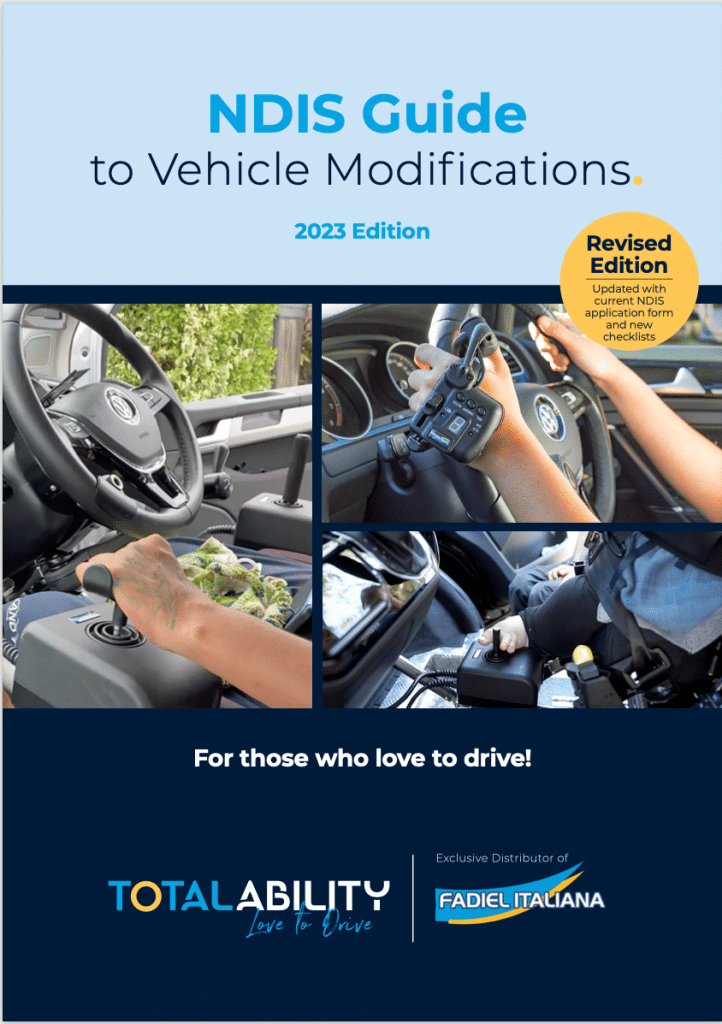
Total Ability Guide covers:
- Initial Assessment
- Understanding the Plan
- Assistive Technology & NDIS
- State Motoring Authorities
- Assessment Considerations
- Quotes and Evidence
- High-cost Vehicle Modifications
- The NDIS Application
- After Lodgement
- Checklists
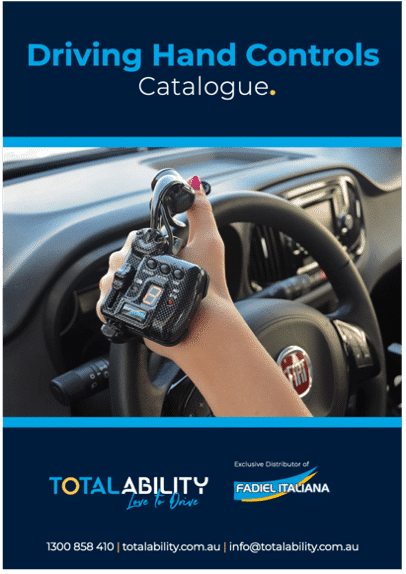
Total Ability Catalogue with:
- Total Ability's range of driving hand controls
- For each control, the disabilities and conditions they are suitable for
- A comparison chart outlining the benefits and features of the various types of hand controls
- History of Fadiel Italiana and driving / access equipment


